

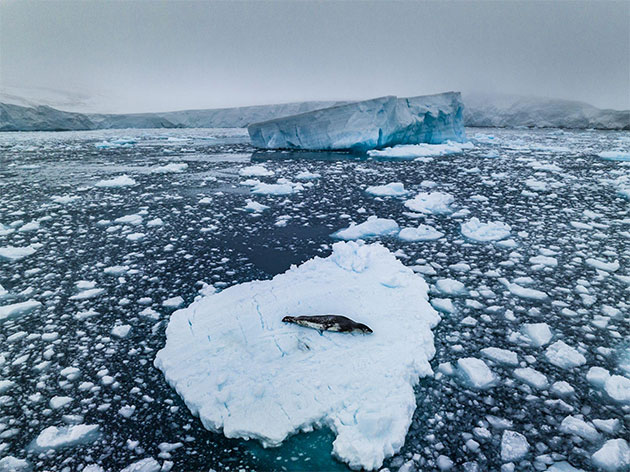
CCAMLR-45 Fails to Reach Consensus on Marine Protection
On October 30, the 45th annual meeting of the Commission for the Conservation of Antarctic Marine Living Resources (CCAMLR-45) concluded in Hobart, Australia, with no consensus achieved on essential marine protection measures or krill fishing regulations. In light of this inaction, conservation groups are calling for a boycott of all krill products among consumers and retailers.
The Importance of Antarctic Krill
The Antarctic region is home to trillions of krill, a keystone species that plays a crucial role in the polar ecosystem. These small crustaceans support nearly all major predators, including seabirds, seals, and whales, and boast one of the largest biomasses of any wild animal on Earth, estimated between 379 and 500 million tonnes.
Krill as a Climate Regulator
Marine biologist and Antarctic Wildlife Alliance Executive Director, Ally Kristan, elaborated on the importance of krill as a significant carbon sink, emphasizing their critical role in maintaining the health of the Southern Ocean. “If krill populations decline, the entire food web could collapse, affecting all species that rely on them,” Kristan warned. “A healthy Southern Ocean is vital for both biological diversity and climate stability.”
Impact of Industrial Fishing on Marine Ecosystems
Despite their ecological significance, industrial fishing fleets harvest substantial quantities of krill annually. While Kristan noted that krill populations are not currently overfished, the concentrated methods of their capture pose severe risks to local marine life and wildlife feeding grounds.
“Research indicates that the krill fishery and the recovering whale population may not both be sustainable due to ongoing climate change,” she stated, highlighting the compounded threats posed by commercial fishing.
Ethical Concerns Surrounding Krill Extraction
Max Bello, a global ocean policy expert with Blue Marine Foundation, raised ethical questions regarding the extraction of Antarctic krill, which primarily supplies upscale products such as omega-3 supplements and fish feed. Kristan argued that krill fishing does not contribute to human food security, as it primarily serves wealthy markets.
“This shared global resource is exploited predominantly by affluent nations, risking extensive environmental damage. An example is the luxury Antarctic toothfish, marketed as ‘Chilean Seabass,’” she noted. Bello added that roughly 70% of harvested krill is directed toward salmon aquaculture, which has demonstrated harmful environmental impacts worldwide.
Lack of Marine Protected Areas (MPAs)
Despite promises made 17 years ago to establish a comprehensive network of MPAs, only two have been implemented. The recent expiration of protective measures meant to regulate krill catches across distinct management zones has elicited significant criticism from conservation groups.
Prior to the CCAMLR summit, calls were made for the reinstatement of fishing restrictions, the adoption of the Antarctic Peninsula MPA, and a firm plan to complete the Southern Ocean’s network of MPAs. However, none of these proposals were acted upon.
Consumer Movement for Marine Conservation
In response to the ongoing inaction, a global initiative has emerged to protect Antarctic marine ecosystems by challenging consumer behavior. During NYC Climate Week, oceanographer Dr. Sylvia Earle and the Antarctic Avengers—comprising scientists, policymakers, and public figures—initiated a worldwide boycott of Antarctic krill, urging consumers to avoid krill-derived products.
Several prominent retailers have supported this movement. In April, Holland & Barrett, a leading British health and wellness retailer, entirely withdrew from the krill market, while approximately 94% of German pharmacies pledged to stop selling krill products. Australia’s major supermarket chains, Coles and Woolworths, have joined this initiative as well.
The Antarctic Wildlife Alliance continues to advocate for similar actions among American retailers to safeguard the fragile Antarctic ecosystem.
© Inter Press Service (20261112181814) — All Rights Reserved. Original source: Inter Press Service

Chief Editor of Quincy City Beat — Quincy, MA's independent investigative newspaper covering Greater Boston and the entire Commonwealth of Massachusetts with fearless public accountability and free access for all readers.










Discussion about this post