

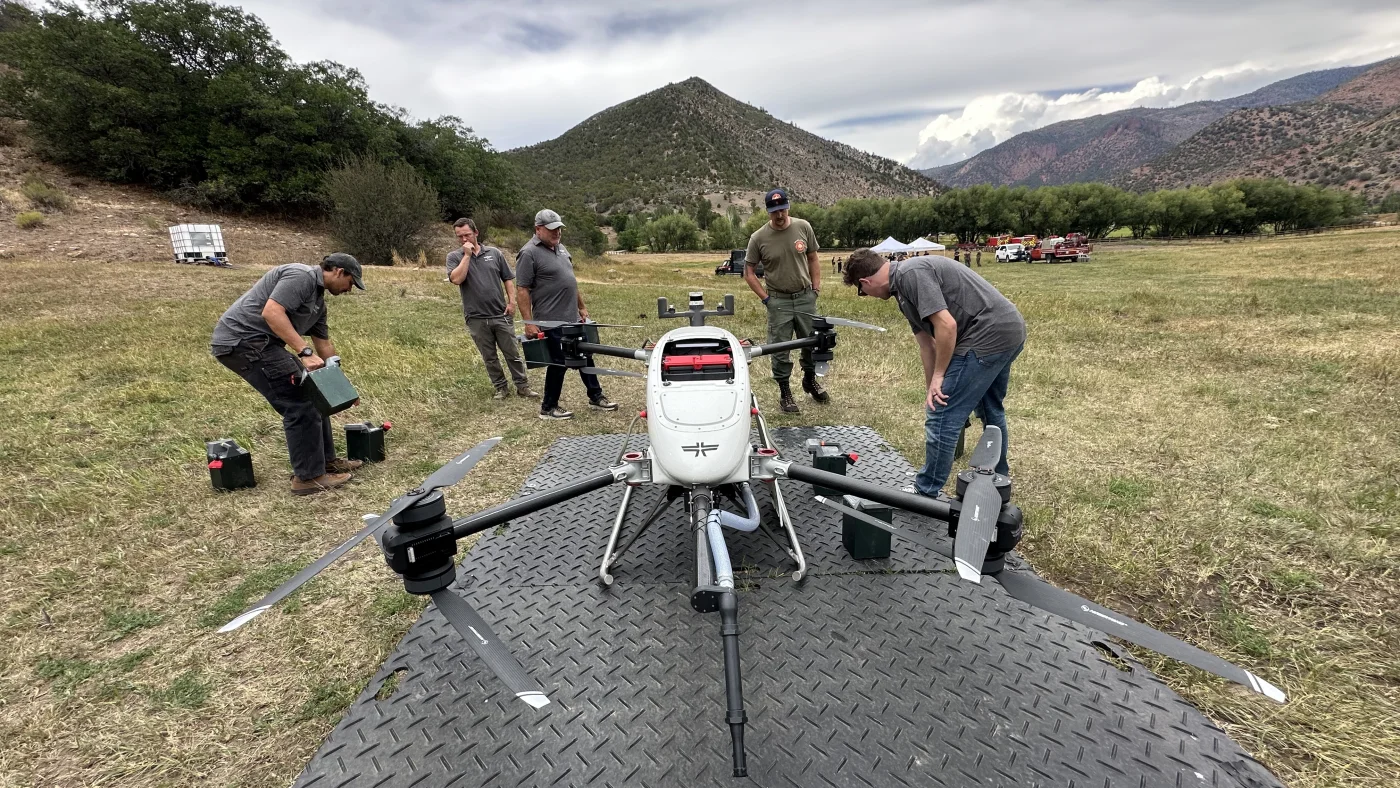
Innovative Drone Technology Enhances Firefighting Efforts in Aspen, Colorado
Fire crews in Aspen, Colorado are training to operate new drones capable of dropping fire-suppressing foam. Halle Zander
On an unusual overcast day in late summer, fire trucks surround a grassy area in the western Colorado mountains, as a notable hum emerges. Firefighters from the Aspen Fire Protection District gather around an iPad, observing a volunteer maneuvering a substantial drone.
This innovative drone, manufactured by Seneca, measures approximately 10 by 12 feet, resembling a giant insect with four large propeller arms. It is designed not only for surveillance but also for potential firefighting applications, utilizing artificial intelligence to help extinguish blazes.
Operational Changes with Advanced Technology
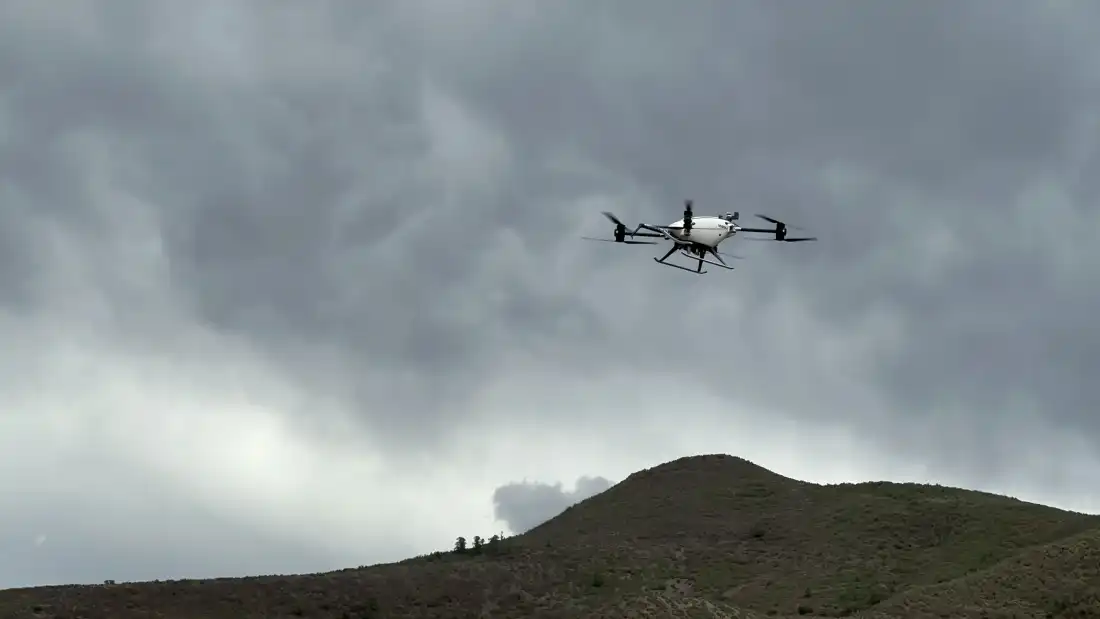
A Seneca drone hovers over ground during training exercises. Aspen Fire Protection District could be the first in the nation to operate these drones independently. Halle Zander
The drones, developed by California-based Seneca, are capable of operating in a swarm, carrying between 500 to 1,000 gallons of fire foam, making them highly effective for initial attack strategies. Deputy Chief Andy Fisher noted that the drones are user-friendly, stating light-heartedly that even a 12-year-old could operate them.
Upon the official launch of the drone program, anticipated as early as next year, Aspen Fire Protection District will become the first fire department globally to operate these drones autonomously, marking a significant advancement in firefighting capabilities.
Strategic Deployment of Drones
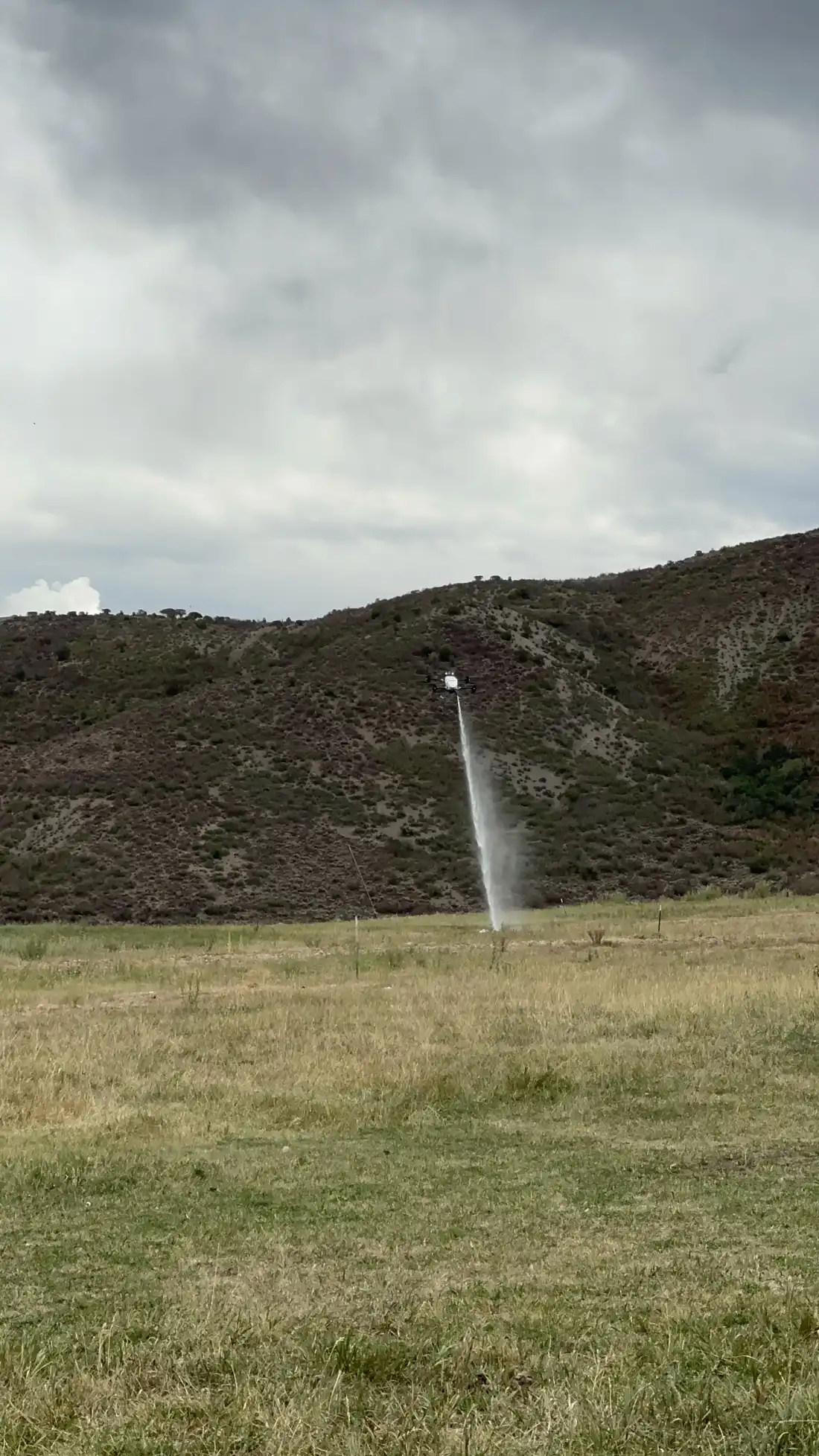
A Seneca drone releases water in a training drill outside Aspen, Colorado. Halle Zander
These advanced drones are particularly valuable for reaching remote fires, such as those caused by lightning strikes, where immediate action can prevent larger incidents. The area’s dense forests create a high-risk environment, highlighted by the challenges of evacuating residents during wildfires.
Fisher emphasized the importance of early intervention, stating, “If we could get it quick, keep them small and tackle them while they’re smoldering instead of waiting for the wind to exacerbate the situation, that is the ideal approach.”
According to Seneca’s founder, Stuart Landesberg, the drones can navigate challenging terrain, boasting a range of 5 to 10 miles, which can extend to 20 miles when carrying no payload.
Potential Impact on Firefighting Practices
While these drones will not replace traditional air tankers on large fires, they will serve significant operational roles, including providing surveillance and extinguishing hot spots. Landesberg mentioned that compared to helicopters, the drones present a more cost-effective solution for aerial firefighting.
Aspen Fire expects to invest approximately $2.5 million over five years into this innovative technology, with funding primarily supported by private donors. Other fire departments across the nation are keenly observing Aspen’s progress before considering similar investments in drone technology.
Joe Stutler, a veteran firefighter, expressed optimism about the potential benefits of drones, especially in nighttime operations when traditional aircraft are often grounded. However, he remains cautious, noting that the effectiveness of drone interventions has yet to be demonstrated in actual wildfire situations.
As Aspen Fire prepares to initiate operational trials once their training is complete, the use of these drones is expected to enhance firefighting efforts across the entire state, paving the way for advancements in wildfire management and response.

Chief Editor of Quincy City Beat — Quincy, MA's independent investigative newspaper covering Greater Boston and the entire Commonwealth of Massachusetts with fearless public accountability and free access for all readers.










Discussion about this post