

Republican Setbacks Spark Uplifted Media Coverage Following Election
Following a tumultuous election cycle, broadcast networks have shifted their narratives significantly, offering optimistic coverage predominantly favoring Democratic victories. This shift was especially noticeable with the surprising outcomes in traditionally Republican strongholds like Texas.
Candid Reactions to Victorious Candidates
On November 4, media interactions with winning candidates appeared to be more celebratory than critical. ABC’s George Stephanopoulos engaged Texas Senator-elect James Talarico, asking him to elaborate on his vision of a “politics of love” for a national audience newly acquainted with his platform. Talarico responded passionately about the division plaguing society, stating, “I’m tired of being pitted against my neighbor.”
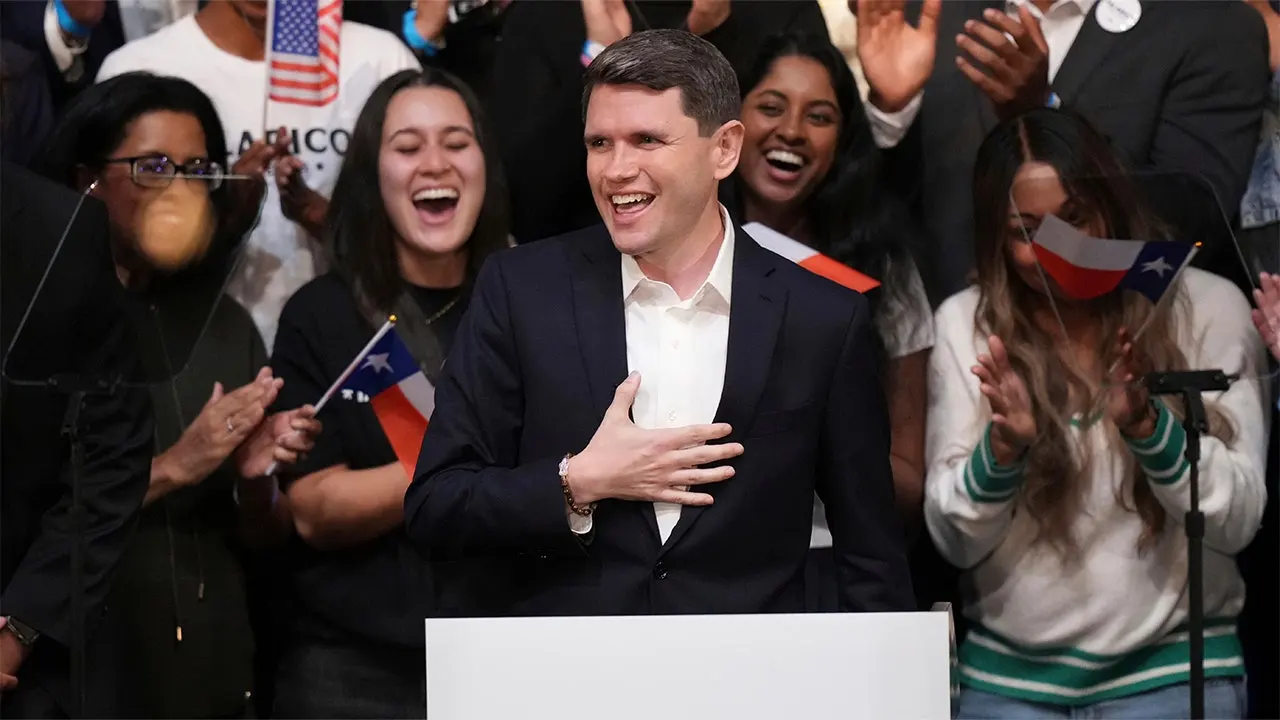
Democratic Senator-elect James Talarico delivering remarks at an election night event in Austin, Texas, on November 3, 2026. (Eric Gay/AP Photo)
Contrast in Coverage of Democratic and Republican Successes
The enthusiasm for Democrats in the media stands in stark contrast to the criticism Republicans faced leading up to the elections. This apparent double standard drew attention as journalists celebrated victories like Talarico’s while dismissing similar achievements from Republican figures.
On CBS, the coverage continued in a positive vein when discussing newly elected Kansas Senator Adam Hamilton, who is also a pastor. The hosts commended Hamilton’s approach to politics, asking how he intends to uphold the Golden Rule amidst the adversarial nature often associated with political environments.
Historic Wins and Media Representation
In a historic feat, Abdul El-Sayed became the first Muslim senator elected in U.S. history, a narrative amplified by multiple networks. While coverage highlighted the adversity he faced during his campaign—framed as a response to Islamophobic attacks—critics noted that the media glossed over his controversial affiliations and past remarks.
Reports from NBC and CBS focused on the personal challenges faced by El-Sayed, emphasizing his struggle against alleged prejudice rather than addressing broader concerns regarding his political stances. El-Sayed’s achievement was met with praise, especially given the context of divisive rhetoric surrounding his candidacy.
Media Dynamics Following the Election
Following the results, the media narrative suggests that Democratic victories reaffirm a narrative of moral and ethical superiority. Analysts across networks hinted that the election results serve to ‘cleanse’ the national image against notions of systemic racism and divisive politics, attributing such changes solely to the Democratic successes.
This pattern raises questions among viewers about the impartiality of media coverage, especially regarding the portrayal of candidates across party lines. As networks continue to navigate their roles in political discourse, the focus on Democratic achievements appears set to maintain momentum in the upcoming political cycles.
Conclusion
As America reflects on recent electoral outcomes, the media’s role and approach will continue to be scrutinized. With shifting narratives and a focus on diversity and inclusion, the implications for future elections remain to be seen.

Chief Editor of Quincy City Beat — Quincy, MA's independent investigative newspaper covering Greater Boston and the entire Commonwealth of Massachusetts with fearless public accountability and free access for all readers.







Discussion about this post