

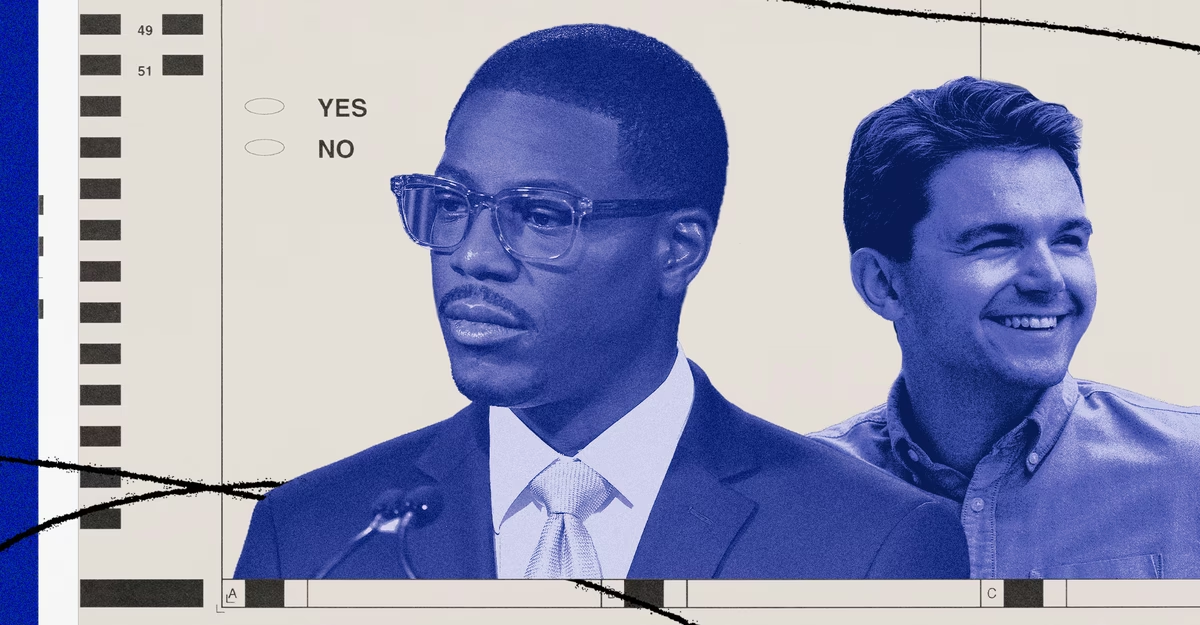
Momentum Builds for Wisconsin Democrats Ahead of Historic Elections
David Crowley, the Milwaukee County executive, exuded enthusiasm as he entered a campaign rally at the University of Wisconsin at Whitewater on Thursday. Celebrating his hometown Brewers’ recent World Series victory, Crowley acknowledged the potential historical significance of his own campaign—he aims to become Wisconsin’s first Black governor. Clad in a Brewers pullover and bright sneakers, he energizingly declared, “This is where I get a little giddy!”
Democratic Aspirations for a Legislative Trifecta
Wisconsin Democrats are increasingly optimistic about not only retaining the governorship but also seizing control of both chambers of the state legislature for the first time since 2008. “Think about what we’re going to be able to do with that,” Crowley told an enthusiastic audience of students. Such a political sweep would represent a remarkable resurgence for the Democratic Party in Wisconsin, a key swing state historically dominated by Republicans. A unified government could allow Democrats to reverse numerous conservative policies enacted under former Governor Scott Walker and restore budgetary allocations that have been slashed in recent years.
A Broad National Strategy
This drive for a legislative trifecta in Wisconsin aligns with a broader Democratic strategy aimed at maximizing their electoral opportunities across several states, including Arizona, Pennsylvania, Michigan, and Minnesota. Heather Williams, president of the Democratic Legislative Campaign Committee, noted, “We’re looking at what could be a generational shift in state legislative power.”
Potential Changes in Policy Gameplay
Winning control at the state level could yield more immediate legal and policy transformations than the ongoing struggle for congressional control. Given the likelihood of legislative gridlock at the federal level during President Trump’s final two years in office, an increase in Democratic governance at the state level could significantly reshape the redistricting landscape, countering the GOP’s efforts to gerrymander districts in red states.
Shifts in Campaign Focus
In past years, Republicans significantly outspent Democrats in state legislative campaigns, especially during the GOP wave of 2010, which led to sweeping victories at various levels. However, in recent years, Democrats have been making concerted efforts to catch up, successfully convincing a traditionally presidential-focused donor base of the importance of state-level races. An example is the rebranded organization, the States Project, which has raised $100 million to bolster Democratic efforts at the state level.
Wisconsin: A Pivotal Battlefield
The renewed focus on state-level power has particularly paid off in Wisconsin. Over the past decade, the political landscape has changed dramatically, as Democrats have gradually eroded Republican dominance. In 2018, Tony Evers narrowly defeated Scott Walker, signaling a shift in the state’s political dynamics. This year, the Wisconsin Supreme Court ruled against the Republican-drawn legislative map for being unconstitutional, leading to the adoption of fairer district lines ahead of the upcoming elections.
New Candidates and Fresh Perspectives
As momentum builds, Democrats have attracted strong new candidates like Trevor Jung, a 30-year-old transit director from Racine, who is vying for an open state Senate seat. Jung articulated the sentiment of this election cycle: “This is the tipping point.” Reflecting on the previous gerrymandered maps, he noted the profound changes that have opened opportunities for Democratic candidates.
The Impact of Economic Issues
Amid rising living costs and dissatisfaction with governmental efficacy, campaigns have gained traction by addressing voters’ immediate concerns. Jung emphasized, “Everybody’s upset about rising costs. People are screaming for change.” In addition, longstanding Republican incumbents have opted not to seek reelection, presenting further opportunities for Democrats.
Election Stakes and Future Prospects
With independent analysts predicting possible Democratic gains, the stakes for Wisconsin’s state Senate and Assembly are high. The party aims to focus on voter-centric proposals that directly address issues such as healthcare costs, education funding, and economic relief. The potential for a Democratic majority could reshape future congressional redistricting battles, especially given the state’s contentious electoral history.
Final Thoughts
As election day approaches, Wisconsin Democratic Party Chair Devin Remiker expressed cautious optimism, acknowledging past experiences with polling inaccuracies but remaining hopeful about the momentum generated in recent months. “In Wisconsin, usually we’re some version of cautiously or nauseously optimistic,” he stated. “But this year, I will drop the qualifier and say that I’m optimistic.”

Chief Editor of Quincy City Beat — Quincy, MA's independent investigative newspaper covering Greater Boston and the entire Commonwealth of Massachusetts with fearless public accountability and free access for all readers.









Discussion about this post