

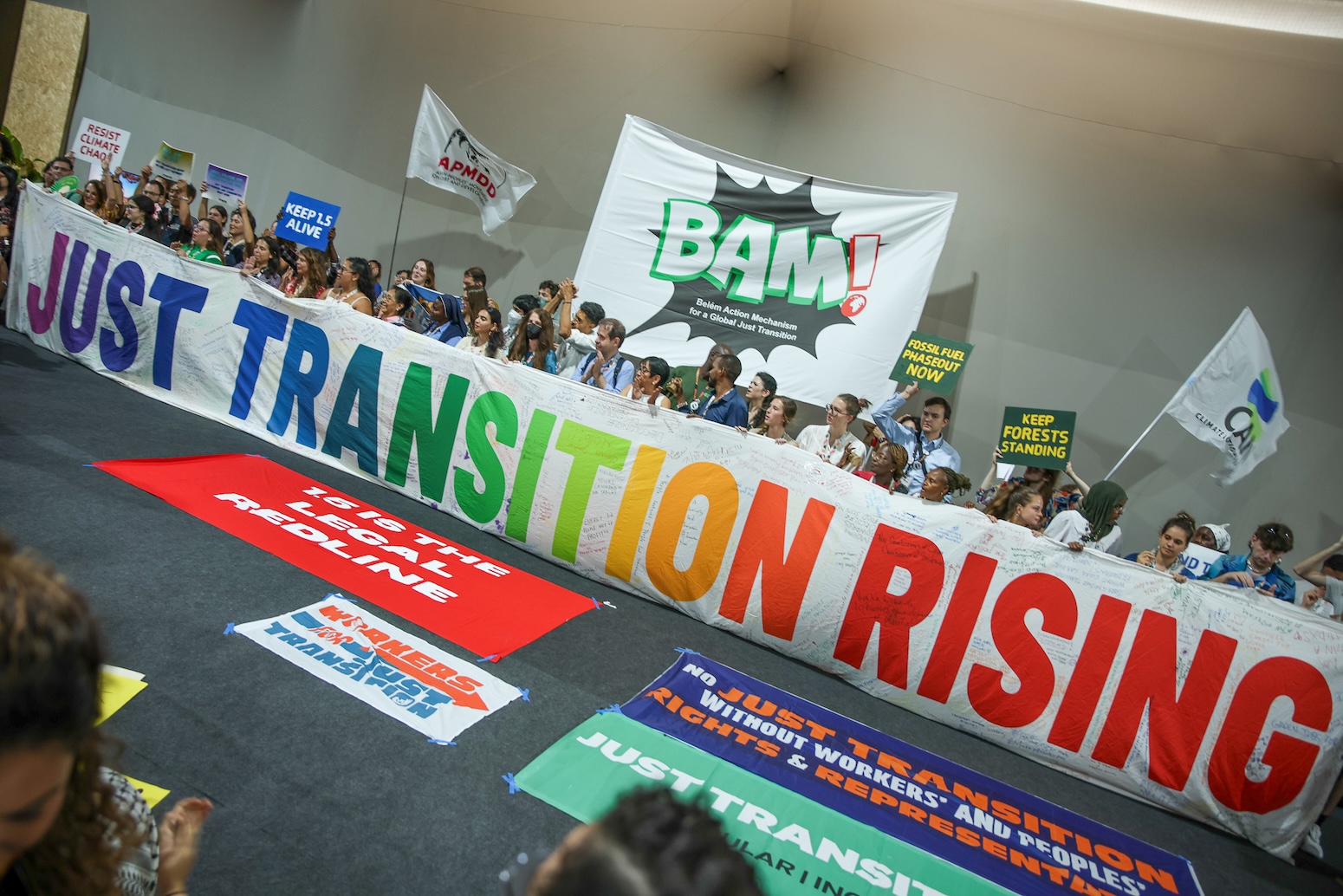
Antalya Set for Launch of Just Transition Mechanism at COP31
As the COP31 climate summit approaches in Antalya, Turkey, a pivotal focus will be the introduction of a “just transition mechanism.” This initiative stems from years of advocacy by civil society groups for support as nations pivot to low-emissions energy models and reduce dependence on fossil fuels.
During the COP30 UN climate discussions held last year in Belém, Brazil, agreement was reached among participating nations to create a framework termed the “Belém-Antalya Mechanism” (BAM) to facilitate this transition.
Proponents of the BAM envision it as a centralized hub dedicated to just transitions, aimed at providing assistance to workers and communities globally. However, the precise structure and functioning of the BAM remain unclear, with differing opinions expressed between developed and developing nations regarding its objectives.
These disagreements persisted through discussions at the UN climate conference in Bonn in June 2026, particularly concerning the critical issue of funding arrangements for the BAM.
Carbon Brief explores the origins of the BAM, its potential impact on facilitating just transitions, and anticipated developments at COP31.
The Concept of Just Transition in UN Climate Talks
The notion of a “just transition” advocates for support to be extended to workers and communities affected by the transition to a low-carbon economy, encapsulating a fundamental principle of climate justice. While the term often references individuals in the fossil fuel sector, it also applies to transitions across agriculture, heavy industry, and various other sectors.
This concept emerged in the 1980s with collaborative efforts between U.S. labor unions and environmental justice organizations and has become integral to international climate dialogues. The preamble of the 2015 Paris Agreement explicitly commits to considering the workforce’s just transition and creating decent work opportunities in line with nationally defined development priorities.
Bert De Wel, a policy officer at the International Trade Union Confederation (ITUC), commented on the evolution of this idea, emphasizing the labor movement’s gratitude for the wide-ranging support received since its inception. The Paris Agreement’s recognition of decent work linked to just transitions marked a significant milestone.
During COP24 in Katowice, Poland, a city historically tied to coal production, the presidential declaration underscored the necessity of carbon reduction policies that facilitate a “just transition of the workforce,” aimed at fostering meaningful employment.
The subsequent agreement at COP27 in Egypt to initiate a “work programme on just transition” (JTWP) reflected a major advancement, laying the groundwork for more concrete discussions around just transitions.
However, varied perspectives on the JTWP’s goals have resulted in challenging negotiations, especially since the 2024 COP29 summit saw discussions falter without resolution. Despite setbacks, COP30’s resolution to establish the BAM was heralded as a significant achievement for civil society.
Origin of the Just Transition Mechanism
Leading up to COP30, advocacy efforts intensified for an “institutional arrangement” geared toward translating dialog under the JTWP into tangible outcomes. Originally dubbed the “Belém action mechanism” by activists, it was later adapted to the “Belém-Antalya mechanism” post-COP30 negotiations.
Anabella Rosemberg, senior advisor on just transition at Climate Action Network (CAN) International, notes that civil society’s collaboration with trade unions and other groups helped elevate the need for actionable frameworks. Previous dialogues, she asserts, would not suffice in achieving just transition strategies on-the-ground.
This collaborative effort encompassed a wide array of activities, from producing policy papers to leveraging social media campaigns aimed at raising awareness and securing broader support.
In the Bonn climate dialogue in June 2025, various proposals for a new institutional arrangement emerged, highlighting the necessity for a comprehensive mechanism to facilitate just transitions globally.
The final agreement to create the BAM received applauses at COP30, with civil society representatives viewing it as a decisive moment for pursuing equitable transitions.
Potential Functions of the Just Transition Mechanism
Advocates contend that the BAM could streamline the current fragmented landscape of just transitions by consolidating resources and addressing existing barriers. Rosemberg explained that the BAM could unite individuals and groups engaged in just transitions, fostering collaboration and providing necessary support.
Several insights proposed by civil society suggest a trifecta structure for the BAM encompassing a steering body, a knowledge-generation arm, and an implementation arm. This design aims to enhance coordination and support for projects seeking to facilitate just transitions.
Rosemberg emphasizes that this mechanism could incorporate a “matchmaking platform” to expedite support and focus on the bottom-up identification of barriers facing practitioners in the field, thus ensuring the implementation of effective just transition strategies.
Various additional proposals suggest structural elements highlighting the need for coordination, knowledge-sharing, and international collaboration to enable just transitions. These diverse perspectives showcase a shared vision of leveraging the BAM to foster transformative climate action.
Financial Considerations Surrounding the Mechanism
Concerns over the financial implications of establishing the BAM have emerged within UN climate negotiations. The initiative is set against a backdrop of financial constraints faced by the UNFCCC following diminished contributions from several parties and the U.S. withdrawal.
Some nations have expressed reluctance to develop another funding-dependent mechanism while the UNFCCC grapples with its existing budgetary challenges. Nevertheless, proponents believe that the costs associated with the BAM could be minimal and that it could efficiently utilize existing resources.
Rosemberg points out that adopting a streamlined approach could mean leveraging established climate finance channels to minimize the need for new funding. The operational cost for a similar mechanism, such as the Climate Technology Centre and Network, emphasizes that securing financial backing is feasible if there is political will behind the initiative.
De Wel adds that the BAM initiative should complement rather than replicate existing efforts, reinforcing the vision to ensure that all climate finance promotes just transitions.
Anticipated Outcomes in Antalya
As the commencement of COP31 approaches, the recent agreement in Belém signifies progress towards establishing the BAM, although challenges remain in reaching consensus on operational details.
While a preliminary draft has been proposed for further negotiation, significant details require resolution at COP31 in order for the BAM to commence effectively. De Wel notes that quick approval of COP31’s agenda and constructive negotiations among key blocs are critical for progress.
Civil society groups have called for decisive measures to operationalize the BAM, including a timely first meeting for a core “just-transition committee.” Advocacy for implementation continues, with groups voicing strong support for the mechanism and emphasizing the necessity of addressing financial means for action.
As discussions unfold, participants will strive to ensure the BAM’s establishment is equitable, participatory, and effectively designed to overcome barriers to just transitions in climate action.

Chief Editor of Quincy City Beat — Quincy, MA's independent investigative newspaper covering Greater Boston and the entire Commonwealth of Massachusetts with fearless public accountability and free access for all readers.










Discussion about this post