

Significant Decline in Climate Finance for Developing Nations
The commitment of public funding to assist developing nations in addressing climate change has plummeted by over 70% in 2026, as revealed by an analysis conducted by Carbon Brief.
Under UN climate treaties, developed nations are obligated to offer “climate finance” and typically announce multi-year funding commitments to fulfill their international responsibilities.
Most of these financial pledges expired in 2025, coinciding with the US’s withdrawal from global climate initiatives and substantial cuts to many European aid budgets.
Only five countries have announced new multi-year financial pledges, of which the UK is the sole major contributor.
Key financial players like Germany, France, and Japan have yet to unveil new funding strategies, and no new commitments from the US are anticipated.
Consequently, the total public climate finance pledged for the coming years now stands at just $11.7 billion per year, a sharp drop from approximately $40 billion observed previously.
Experts attribute this decline to ongoing global conflicts, fiscal pressures, and the rise of far-right political movements that hinder developed nations from committing new funds.
As the COP31 summit unfolds in Turkey, developing countries emphasize their immediate need for fresh financial support, following commitments made just two years prior to enhance global climate financing.
Absence of New Financial Commitments
As mandated by the Paris Agreement, developed nations are expected to provide essential climate finance to support developing countries in reducing their emissions and preparing for climate-related disasters.
Such financial assistance can be channeled through international development banks, UN climate funds, and private sector investments. However, a significant portion needs to come directly from the public finances of developed countries, primarily through foreign aid budgets. This public funding comprises about a third of the climate finance received by developing nations in recent years.
Two years ago, nations agreed to increase annual climate finance from $100 billion in the early 2020s to $300 billion by 2035.
Major donor countries have historically supported these goals through multi-year financial pledges, yet nearly all these commitments expired in 2025. Few major contributors have issued new pledges to extend their commitments through 2030.
The lack of new financial commitments is reflected in a tracker maintained by climate NGOs NRDC and E3G.
According to the analysis from Carbon Brief, developed countries had previously pledged about £42 billion per year in public climate finance. Current pledges indicate a reduction of approximately 71%, bringing it down to roughly £11.8 billion for the rest of the decade.
Key Players in Climate Finance
The majority of global climate financing is provided by five countries: Japan, Germany, France, the US, and the UK.
Together with the European Union, these nations account for approximately 90% of all bilateral public climate finance directed towards developing countries.
Among these major economies, only the UK has announced new commitments, allocating £6 billion ($8 billion) in aid between 2026-27 and 2028-29, in addition to £6.7 billion ($8.9 billion) from sources outside its primary aid budget. This pledge constitutes half of the total annual funds anticipated from 2026 onward, averaging $5.7 billion per year.
The European Commission makes up a significant part of the remaining contributions, promising an average of $4.5 billion annually until 2027 as part of a larger budget commitment of €28 billion ($31.8 billion) from 2021 to 2027, with discussions ongoing regarding contributions post-2027.
Canada has committed to spend CA$5.3 billion ($4.1 billion) by 2030, averaging $860 million annually. Other nations such as the Netherlands, Switzerland, and Belgium have also made smaller financial commitments.
While developed nations pledged to scale up climate finance, these newly announced pledges are either less ambitious or only marginally more ambitious than earlier commitments. The UK’s new pledge may seem ambitious, but it reflects a recalculation of how climate finance is accounted, including $8.9 billion in “additional” public finance which was not part of previous evaluations.
The absence of a new pledge from the US is particularly notable, as it had committed to providing $11.4 billion in annual support by 2024 under the Biden administration. Following changes in US administration, the country has once again distanced itself from the Paris Agreement and has no clear plans for climate finance in the immediate future.
Australia’s absence is also significant as it co-hosts COP31, with experts warning that a failure to announce a climate finance pledge could undermine global efforts to combat climate change.
European Budget Constraints
Europe is a major source of international climate finance; however, many European governments have drastically reduced their aid spending recently, citing economic challenges and prioritizing defense expenditures.
Germany and France, the largest contributors in Europe, had both pledged to reach €6 billion ($6.8 billion) annually by 2025 but have not committed to future targets beyond that. Both nations have faced cuts to their aid budgets, impacting their climate finance contributions significantly.
Dr. Anja Carolin Gebel, a senior policy advisor at Germanwatch, noted that political changes have caused climate finance to become a lesser priority in the new coalition government.
France is also experiencing political shifts, as Gaïa Febvre, international policy coordinator at Réseau Action Climat, pointed out that the upcoming presidential election and the influence of far-right politics complicate new international financial commitments.
With further political instability in other European nations like Spain and Sweden, additional climate finance announcements appear increasingly uncertain.
Despite these challenges, some countries have indicated intentions to maintain climate finance without formal pledges. For instance, the Dutch government has committed to a minimum of €300 million ($334 million) annually until 2031, although total contributions will likely be higher in 2026 and 2027.
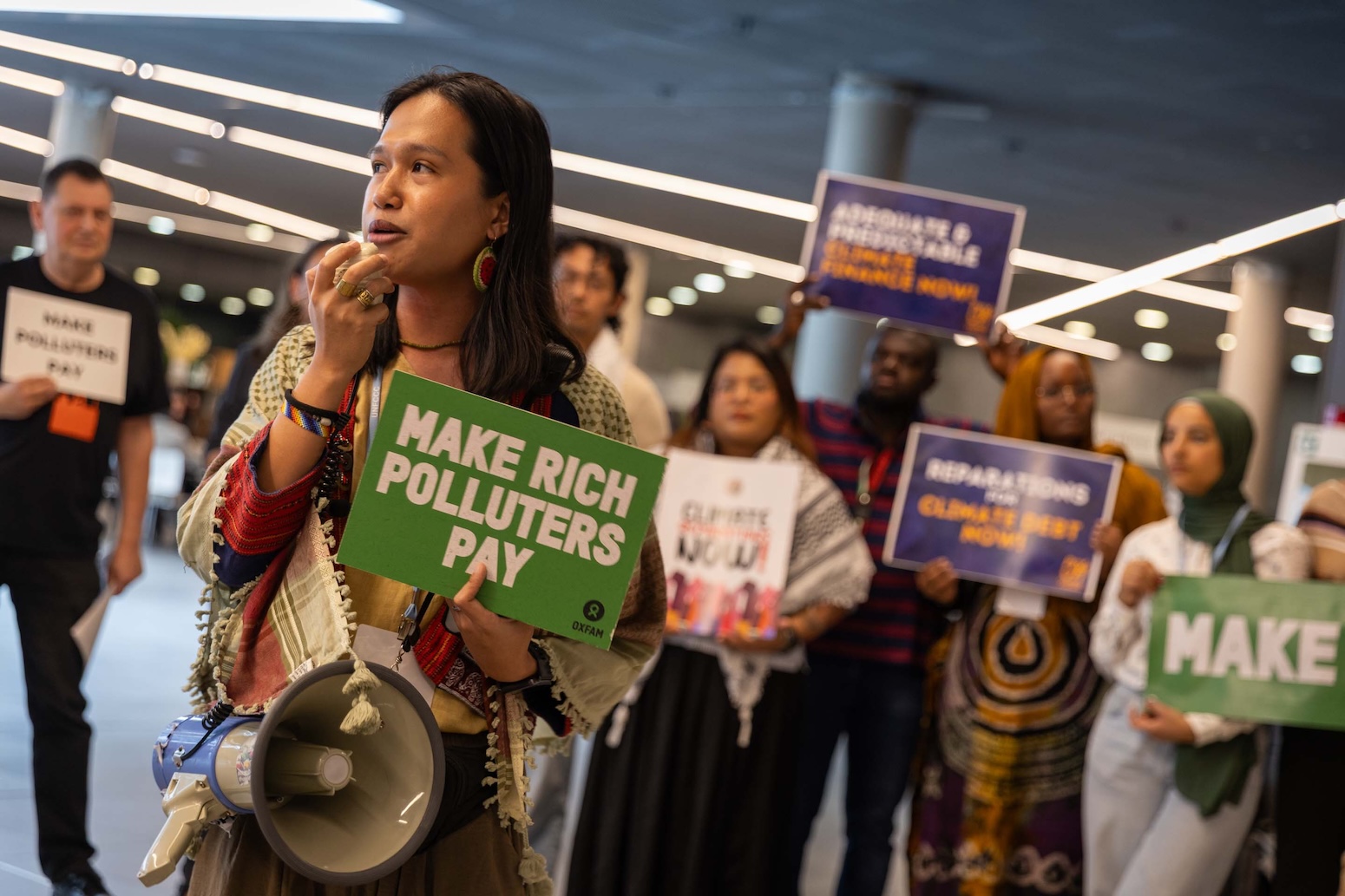
In response to the declining financial commitments, developing countries are advocating for a “climate-finance work programme” at COP31 to facilitate discussions on enhancing public climate finance from developed nations.
The European Union has asserted that its member states remain the predominant providers of public climate finance, calling on developing nations to submit overdue plans for emission reductions. In 2025, the EU and its member states provided a record €32.3 billion ($40 billion) in climate financing.
Commenting on the current climate finance landscape, EU climate chief Wopke Hoekstra remarked that discussions about new funding have virtually stalled.
Joe Thwaites, director of international climate finance at NRDC, emphasized the need for developed nations to demonstrate leadership in climate finance to ease negotiation tensions. He remarked, “The absence of new announcements complicates finance negotiations more than necessary.”
Methodology
This report is based on the climate-finance commitments tracker operated by the NGOs NRDC and E3G, alongside additional research. The analysis considers only the 23 “developed” countries obligated to offer climate finance, as well as the EU, which includes Western Europe, the US, Australia, Canada, and New Zealand. Japan and Norway, substantial contributors, are not included due to the lack of specific public-finance pledges.
Carbon Brief converted multi-year commitments into annual figures, using 2025 as the benchmark for the “pre-2026” year. Countries that promised a total amount by 2025 were assigned that value, while others with multi-year targets had averages calculated. Countries like Belgium, Switzerland, and the US set targets only through 2024, so their 2024 figures were utilized instead.
These figures were then compared with projected annual contributions for the remainder of the 2020s, focusing on new pledges from countries such as the UK, Canada, Belgium, Switzerland, and the Netherlands.
The evaluation includes all of the UK’s newly pledged public finance, which also factors in $8.9 billion in “additional” public finance mobilizing private sector funds. Earlier analyses did not include this funding as it was not formally tallied towards previous climate-finance targets.
This analysis does not account for any contributions made by Germany and France toward the Tropical Forest Forever Facility (TFFF), as their impact on the overall findings is deemed negligible, shifting the decline from 71% to 70%.

Chief Editor of Quincy City Beat — Quincy, MA's independent investigative newspaper covering Greater Boston and the entire Commonwealth of Massachusetts with fearless public accountability and free access for all readers.










Discussion about this post