

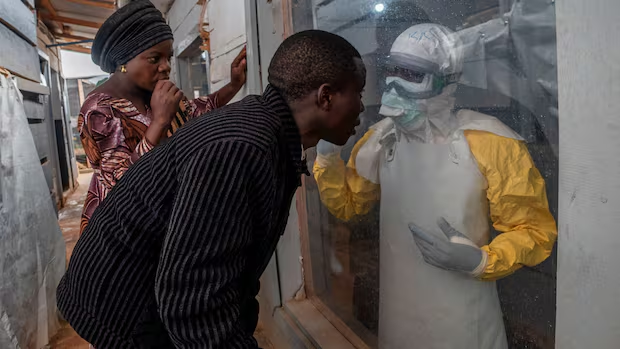
Ebola Outbreak Response Shows Progress Amid Ongoing Challenges
On Friday, United Nations health officials expressed cautious optimism regarding the response to the ongoing Ebola outbreak, which began six months ago and has raised global alarm. However, they highlighted that the outbreak continues to encroach upon remote and perilous regions of the Democratic Republic of the Congo (DRC).
With confirmed cases exceeding 11,100, this Ebola outbreak marks the second deadliest on record, claiming over 5,400 lives according to the Africa Centres for Disease Control and Prevention (Africa CDC).
Emergence of New Cases in Remote Areas
The outbreak, initially detected in mid-May, stems from the uncommon Bundibugyo strain of the virus, for which effective treatments and vaccines remain unavailable. Chikwe Ihekweazu, head of the World Health Organization’s Health Emergencies Programme, noted, “Encouraging signs” include a decline in cases in previously affected urban centers like Bunia. However, he also cautioned that new cases are arising in rural, harder-to-reach locales.
Children account for over one-third of the fatalities, with approximately 500 new cases reported weekly, emphasizing the pressing need for continued vigilance. “Rising insecurity presents the most significant challenge to our efforts,” Ihekweazu stated, referencing data that identifies 80 attacks on health facilities and personnel to date.
Violence and its Impact on Health Measures
Recent violence, including an attack by a rebel group in North Kivu that claimed the lives of 66 civilians and three health workers, has further complicated the situation. The violence resulted in the destruction of three health centers and the loss of tracking for over 1,000 monitored contacts, including three confirmed Ebola patients.
Dr. Marie Belizaire, an emergency director with the WHO, emphasized the urgent need for a cessation of hostilities, stating, “Health workers and humanitarian teams must safely reach affected communities, allowing patients access to necessary care.” She reiterated that ongoing violence threatens the progress achieved in recent months.
Improved Testing and Care Facilities
Since the outbreak’s declaration on May 15, the virus has spread across eight provinces. Progress has been noted, particularly in laboratory testing and patient care capabilities. The number of available testing laboratories has increased significantly from two to 30, enabling daily testing for over 4,300 samples. Moreover, capacity for patient admission has expanded to 2,000 beds, with over 3,000 individuals recovering from Ebola.
However, Dr. Wessam Mankoula from the Africa CDC warned that improvements in infrastructure alone would not contain the outbreak. “Surveillance remains a formidable challenge—accurately identifying all potential contacts is critical to our response’s success,” he remarked, noting that only 11% of new cases are identified through contact tracing.
Challenges in Funding and Resource Allocation
Africa CDC reports that while $3 billion has been pledged to address the crisis, only 45% of that funding has actually been disbursed. French medical charity Doctors Without Borders (MSF) added that aid is not reaching those most in need, with reports of untrained staff, ambulances lacking fuel, and insufficient surveillance teams available.
“Despite the substantial financial commitments, many frontline responders are left without the necessary resources to combat the outbreak effectively,” stated Dr. Javid Abdelmoneim, international president of MSF. He characterized the current situation as “unacceptable” and urged both the Congolese government and UN agencies, including the WHO, to ensure that mobilized resources translate into tangible on-the-ground support.

Chief Editor of Quincy City Beat — Quincy, MA's independent investigative newspaper covering Greater Boston and the entire Commonwealth of Massachusetts with fearless public accountability and free access for all readers.









Discussion about this post