

Kenyan Cult Leader Sentenced to 200 Years for Murders of 190 Children
A court in Kenya has sentenced cult leader Paul Mackenzie to an unprecedented 200 years in prison for orchestrating the murders of 190 children, who were reportedly starved to death and buried in a forest. This case marks one of the most horrific ceremonial massacres in modern history, with a total of 500 suspected victims connected to the cult.
The sentence was delivered by Justice Diana Kavedza, who outlined that Mackenzie received 100 years for murder by starvation and an additional 100 years for direct homicide.
Prosecutors revealed that Mackenzie, who operated an apocalyptic Christian sect located in a forest near Kenya’s Indian Ocean coast, instructed his followers to starve themselves and their children as a means to reach heaven before a predicted apocalypse. Witnesses reported that his accomplices used threats and physical violence to coerce victims into compliance. The bodies of the deceased were found in shallow graves, with some reportedly buried alive.
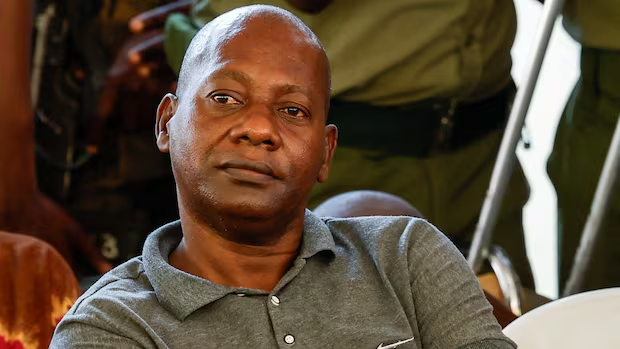
Mackenzie, appearing in court in grey attire, exhibited no visible reaction as the verdict was read during a hearing held in a tent outside the official courtroom. He had previously denied the murder charges, claiming he did not compel individuals to starve, an assertion that the court dismissed.
In addition to Mackenzie, 28 co-defendants received sentences ranging from 10 to 160 years following a trial last month.
Lawrence Obonyo, the defense attorney representing Mackenzie and many of the convicted, announced plans to appeal the ruling.
Justice Kavedza emphasized the manipulative tactics used by Mackenzie to gain the trust of vulnerable followers, highlighting that those who attempted to break the fast were subjected to beatings and confinement. “Children witnessed their siblings die after enduring days of hunger,” she stated. “Those who attempted to steal food or water were punished brutally.”
The Shakahola Forest Tragedy
The Shakahola Forest case captivated Kenya when police began unearthing bodies in April 2023. Although the trial primarily addressed the deaths of 190 children and one adult, the Kenya National Commission on Human Rights has reported the discovery of 448 bodies in the area. Mackenzie is also implicated in the deaths of an additional 52 individuals found nearby, potentially bringing the total casualties to 500. Mackenzie has denied all charges relating to this larger death toll.
The scale of the tragedy draws grim comparisons to historical cult events, such as the 2000 Ugandan massacre where over 700 lives were lost and the notorious Jonestown incident in Guyana in 1978, which resulted in more than 900 deaths from forced poisoning.
Stephen Mwiti, a father who tragically lost six children in this incident, expressed his profound grief, noting that even if adults consented to Mackenzie’s directives, the children were innocent victims. “I lost my children, and nothing will bring them back,” Mwiti stated. He called for harsher penalties, such as a life sentence, to ensure Mackenzie poses no future threat.
Dan Mackenzie, one of the cult leader’s sons, revealed that he distanced himself from his father’s beliefs, ultimately avoiding the fate of those who perished. “It is a form of justice for those who were lost in Shakahola,” he reflected.
Calls for Accountability in Kenya
Authorities had been monitoring Mackenzie since 2017 after his premises were subjected to police searches. In 2019, his church was shut down in Malindi, leading him to relocate to Shakahola Forest. The tragedies have prompted renewed discussions regarding the need for tighter regulation of religious organizations. In response, President William Ruto established a task force in May 2023 to evaluate the existing legal framework governing such groups, while proposed legislation is still pending approval in Parliament.
Ojiro Odhiambo, a representative from the Kenya Human Rights Commission, stated that while Mackenzie’s conviction is significant, broader accountability is essential. He pointed out that numerous local authorities and law enforcement failed to act on evident signs of danger. “All these parties have let the public down,” he said.
Justice Kavedza echoed these sentiments, urging Parliament to enact measures that will prevent future tragedies. President Ruto has also acknowledged the government’s shortcomings in preventing such losses, taking responsibility for the failures during his administration.

Chief Editor of Quincy City Beat — Quincy, MA's independent investigative newspaper covering Greater Boston and the entire Commonwealth of Massachusetts with fearless public accountability and free access for all readers.









Discussion about this post