

Aerosol Research Enhances Climate Predictions with Innovative Method
Source: Journal of Advances in Modeling Earth Systems
This is an authorized translation of an Eos article. 本文是Eos文章的授权翻译。
Understanding Aerosols
Aerosols consist of tiny particles suspended in the atmosphere and encompass a broad range of substances. These include smoke from wildfires, pollen, desert dust, sea salts entrained by storms, volcanic sulfates, and emissions from industrial activities.
Beyond their impact on visibility and human health, aerosols play a crucial role in weather and climate forecasting. They have the capacity to either reflect or absorb sunlight, leading to warming or cooling effects. Moreover, aerosols act as nuclei for water vapor, facilitating cloud formation and can travel long distances through various atmospheric layers, even crossing continents and oceans.
Challenges in Aerosol Simulation
Despite their significance, replicating aerosol distribution and movement poses challenges due to their complex characteristics. Traditional models often rely on pre-processed satellite data, which reflect aerosol properties indirectly, limiting the accuracy of predictions.
An Innovative Approach
Research led by Zhang and colleagues has introduced a novel, computationally efficient method that integrates satellite-observed radiative data directly into aerosol simulations, enhancing overall accuracy.
Satellites track aerosols by detecting the sunlight reflecting off particles. Traditionally, this real-time data was not feasible to include directly due to excessive computational demands. Current models typically used indirect methods to estimate aerosol properties, resulting in predictions that were less reliable.
Results and Implications
The new methodology utilizes an innovative artificial intelligence (AI) component, pre-trained on extensive datasets, to effectively interpret how aerosol presence influences satellite observations of solar light reflection.
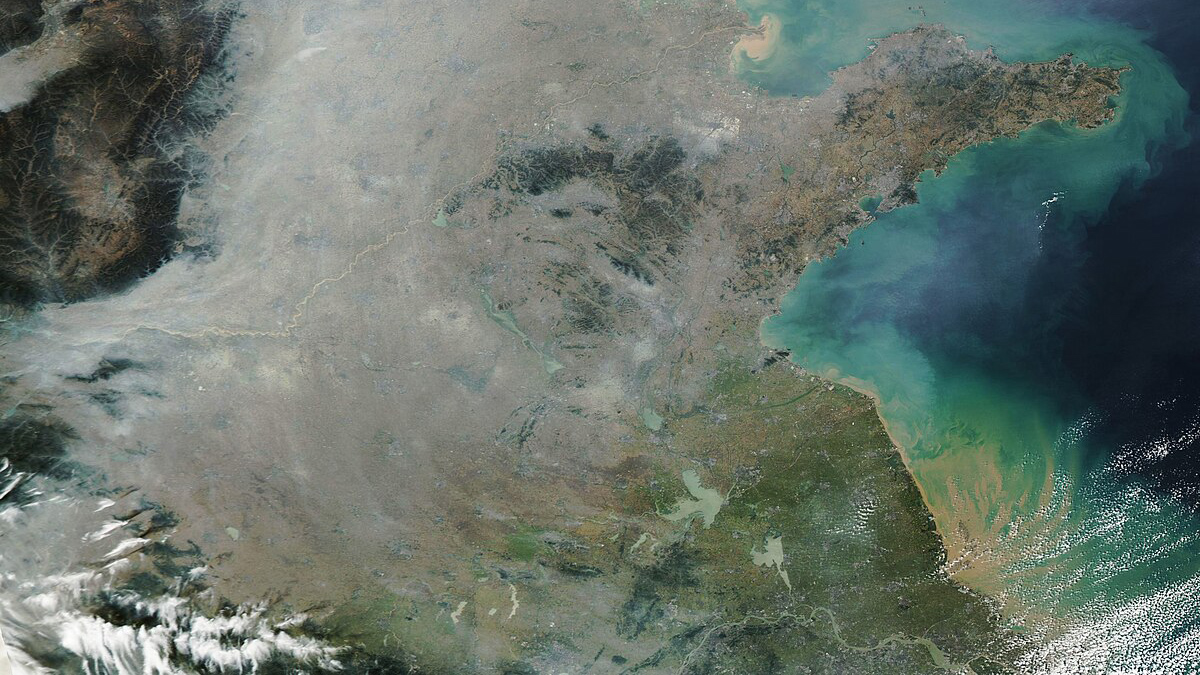
Testing of the technique in China showcased its efficacy, revealing that it reduced prediction errors by approximately 50% when compared to conventional aerosol models. These findings represent a substantial advancement, offering a viable approach to enhance aerosol simulations and improve the accuracy of weather and climate forecasts.
(Journal of Advances in Modeling Earth Systems, https://doi.org/10.1029/2026MS005846, 2026)
—Scientific Writer Sarah Stanley

This translation was made by Wiley. 本文翻译由Wiley提供。
Read this article on WeChat. 在微信上分享本文。

Text © 2026. AGU. CC BY-NC-ND 3.0
Except where otherwise noted, images are subject to copyright. Any reuse without express permission from the copyright owner is prohibited.

Chief Editor of Quincy City Beat — Quincy, MA's independent investigative newspaper covering Greater Boston and the entire Commonwealth of Massachusetts with fearless public accountability and free access for all readers.










Discussion about this post