

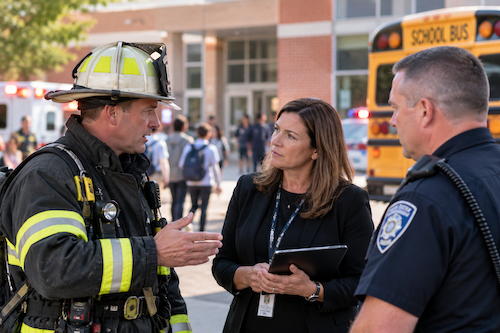
Enhancing School Emergency Response: Key Insights from Experience
In the crucial initial moments of a school emergency, effective communication is vital. A teacher attempts to relay information, a 911 dispatcher collects critical data, and school administrators strive to comprehend the situation while first responders begin their decision-making processes. The trajectory of the emergency response is paved by these early interactions.
Common belief suggests that emergency response starts only when police, fire, or EMS personnel arrive on school grounds. However, as a public safety professional with over 30 years of experience as a firefighter, dispatcher, and emergency response technology advocate, I understand that the foundation for effective emergency responses is laid well in advance of any incident.
Speed: Minimizing Response Time
A prevalent misunderstanding about emergency response is the assumption that a call to 911 triggers immediate action by responders. In actuality, dispatchers must first ascertain the nature of the incident, its location, and the necessary resources. This assessment can be time-consuming, especially when callers are frightened, injured, or disoriented.
Even minor delays, like searching for a phone or relaying information through multiple parties, can hinder response times and affect outcomes. Schools can significantly reduce these timeframes by implementing efficient emergency communication systems and response plans that deliver precise and actionable information promptly to dispatch centers. The quicker first responders grasp the situation, the faster they can mobilize resources, which is particularly critical in rural areas where response times can be significantly extended due to staffing shortages and geographic distances.
Clarity: Essential Information for Responders
A critical advancement in modern emergency response is the provision of detailed mapping information, as opposed to ambiguous location data. School campuses can be intricate, and having a general indication of an emergency, such as “in the high school,” is far less useful than knowing the specific floor, classroom, and nearest entrance to deliver aid effectively.
During my early days in the fire service, we relied heavily on paper maps, which could lead to disastrous mistakes if updates weren’t made. I vividly remember an incident where my team was dispatched to an incorrect location due to outdated mapping information, causing valuable time to be lost. Today, schools have the ability to collaborate efficiently with first responders by ensuring that campuses are accurately mapped and that operational strategies are shared proactively, allowing quicker, more informed decision-making.
This clarity fosters effective collaboration across various responding agencies — including law enforcement, fire personnel, EMS, school resource officers, and administrators — who have differing roles during emergencies. When all parties operate from a unified information base, coordination intensifies, reducing confusion during high-pressure situations.
Coordination: Building Relationships Ahead of Time
The most successful school safety programs are not mere collections of response plans, but rather are founded on solid relationships and regular interactions. Effective coordination necessitates ongoing collaboration between schools and the entities responsible for emergency response.
This cooperative effort should encompass:
- Joint training exercises
- Shared campus maps and operational plans
- Direct communication channels with dispatch centers
- Routine evaluations of response protocols and access routes
Establishing these connections builds trust and familiarity among all parties involved. As first responders become more acquainted with the campus, school leadership gains insights into emergency protocols, and dispatchers can efficiently gather essential information, the overall operational effectiveness during an emergency is greatly enhanced.
A Collective Responsibility
In the realm of public safety, preparing for emergencies is as crucial as responding to them. While we cannot predict every potential crisis, we can equip ourselves with the tools necessary to handle them effectively. Cultivating robust community partnerships ensures that all stakeholders can respond swiftly, communicate clearly, and coordinate efficiently when it matters the most.

Chief Editor of Quincy City Beat — Quincy, MA's independent investigative newspaper covering Greater Boston and the entire Commonwealth of Massachusetts with fearless public accountability and free access for all readers.










Discussion about this post