

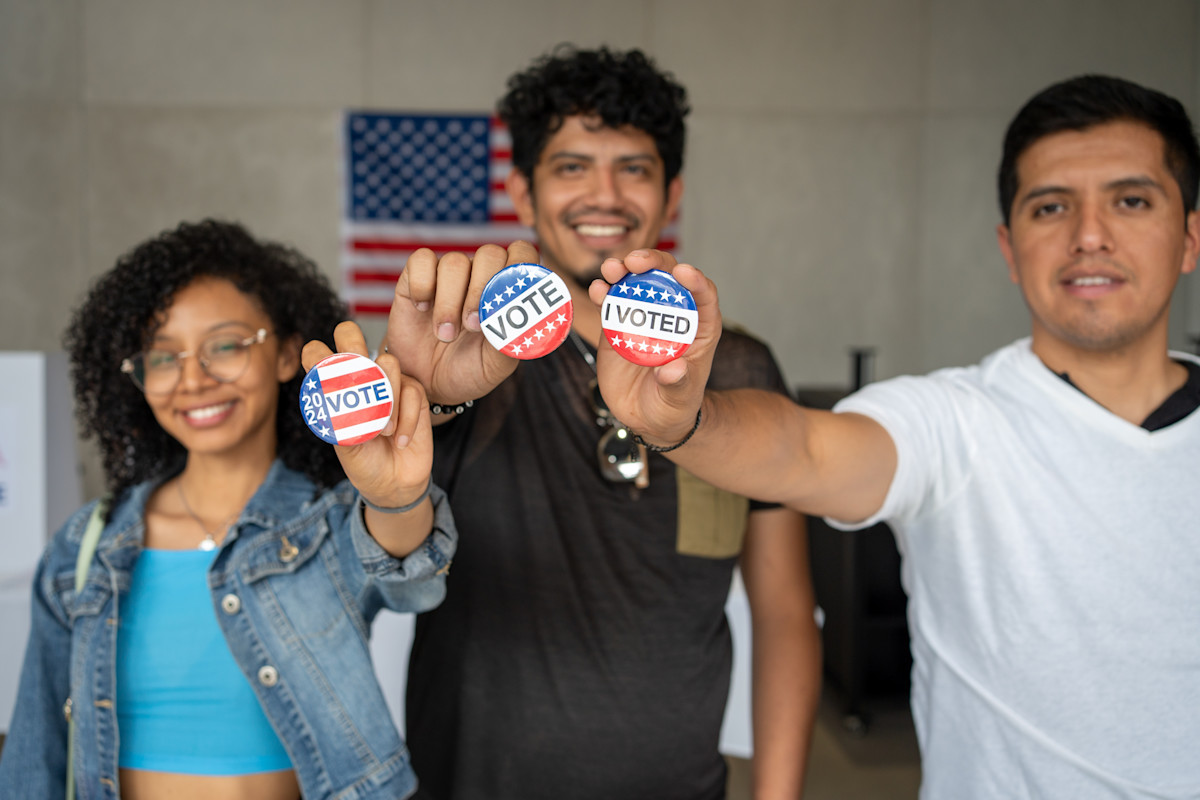
Civics Education Empowers Students to Engage in Elections
In each federal election cycle, students enrolled in Pat Sprinkle’s U.S. history and government classes at the New York City Lab School for Collaborative Studies undertake a unique assignment: observing a political race. These high school students engage in in-depth research on various candidates, predict election outcomes, reflect on their learning experiences, and educate their peers on the races they have studied.
Although this activity falls outside the mandatory curriculum, Sprinkle emphasizes its significance in fostering critical thinking about campaign strategies, the influence of money in politics, and contemporary events. His students focus on competitive elections occurring outside their state to expose them to the “diversity and depth” within the country.
“Our goal is to evaluate our institutions and encourage thoughtful analysis of campaigns as a connection between the electorate and the government,” Sprinkle asserts.
Bringing Civics to Life Ahead of the Midterms
With the midterm elections looming on November 3, educators like Sprinkle are transforming the election period into a practical civics laboratory. As surveys indicate that many young people feel disconnected from their government, teachers are taking a neutral approach: they aim to explain how the electoral system functions rather than endorse specific candidates, encouraging respectful discourse and grounding discussions in voting rights history.
A survey conducted by UNICEF USA and Harris Poll reveals that a significant portion of young individuals, aged 14 to 22, feel that their opinions are overlooked by elected officials. Nonetheless, participation intentions among eligible young voters for state elections increased notably—rising from 47% in 2024 to 62% in 2026.
Sprinkle, who has spent 18 years in education, considers facilitating student voter registration one of his essential responsibilities. This push towards civic engagement is sorely needed, as data from The Civics Center highlights that typically less than 30% of 18-year-olds register for midterm elections, and fewer than 50% participate in presidential elections.
Elevating Understanding of Voting
Research from Tufts University’s Center for Information & Research on Civic Learning and Engagement underlines the connection between high school civics education and increased voter participation, emphasizing that such instruction does not skew students toward any political party or candidate. Organizations such as iCivics, the Center for Civic Education, and the Southern Poverty Law Center provide complimentary civics curricula that teachers can utilize at various educational levels.
In Council Bluffs, Iowa, eighth-grade American history teacher Shauna Cihacek engages her students in statewide mock elections, allowing them to evaluate candidates based on their positions rather than party affiliations. Cihacek emphasizes the need for students to familiarize themselves with the candidates themselves, steering clear from partisan labels to foster informed voters.
In response to student feedback, she has plans to create a classroom environment resembling a polling site for next election cycle, aiming to offer an authentic “voting” experience for her students.
Building Civic Foundations
According to Deslin Chapman, deputy director for content and curriculum at the Southern Poverty Law Center’s Learning for Justice, the election period serves as a prime opportunity to spotlight the importance of civics education. “We need to discuss democratic values and their historical contexts, particularly regarding voting rights,” Chapman states. This understanding should extend beyond election seasons, embedding civic knowledge throughout students’ educational journeys.
For younger students, Chapman recommends a focus on the philosophical aspects of democracy rather than specific elections, creating a solid groundwork for more complex discussions in later grades. Kaylea Dominguez, a science and social studies teacher at Kitley Intermediate School in Indianapolis, also incorporates civic lessons, holding class elections to simulate the voting process and enhance students’ understanding of civic responsibility.
Encouraging Constructive Dialogue
In middle and high school settings, educators are encouraged to emphasize dialogue over debate, helping students explore divergent perspectives without creating a divisive atmosphere. Chapman notes that discussions about elections and voting rights remain nonpartisan at their core, fostering critical thinking and analysis necessary for informed decision-making.
Kevin McCleish, a social science teacher at Lincoln-Way East High School in Illinois, approaches politics as a contest for power, contextualizing current events while teaching electoral processes. This method allows him to present both Democratic and Republican viewpoints without bias.
The Impact of Civics Education
Recent data from the National Assessment of Educational Progress (NAEP) indicates a decline in eighth graders’ civics scores for the first time since 2018, highlighting the importance of enhancing civics education. According to the report, students who scored higher demonstrated greater confidence in recognizing the significance of participating in the political process.
McCleish introduces his students to various forms of political advocacy, demonstrating that voting is just one avenue of civic engagement. He highlights opportunities such as volunteering at polling places and advocating through protest, emphasizing the need for education to relate to contemporary social and political issues.
“Incorporating current events helps make civics more relevant,” McCleish concludes. “As educators, we must ensure that our teachings resonate with students’ experiences and environment to foster an engaged citizenry.”

Chief Editor of Quincy City Beat — Quincy, MA's independent investigative newspaper covering Greater Boston and the entire Commonwealth of Massachusetts with fearless public accountability and free access for all readers.









Discussion about this post